
Summer Energy-Saving Tips for Texas Homes
Last updated: September 3, 2026
Texas summers can place heavy demands on a home’s air-conditioning system. When temperatures stay high, even small changes in cooling habits can affect electricity consumption over the course of a month.
The most effective approach is not one dramatic adjustment. It is a combination of maintaining the cooling system, limiting heat gain, managing the thermostat and reducing unnecessary electricity use throughout the home.
Here are practical ways Texas households can stay comfortable while using electricity more efficiently.
What Uses the Most Electricity During a Texas Summer?
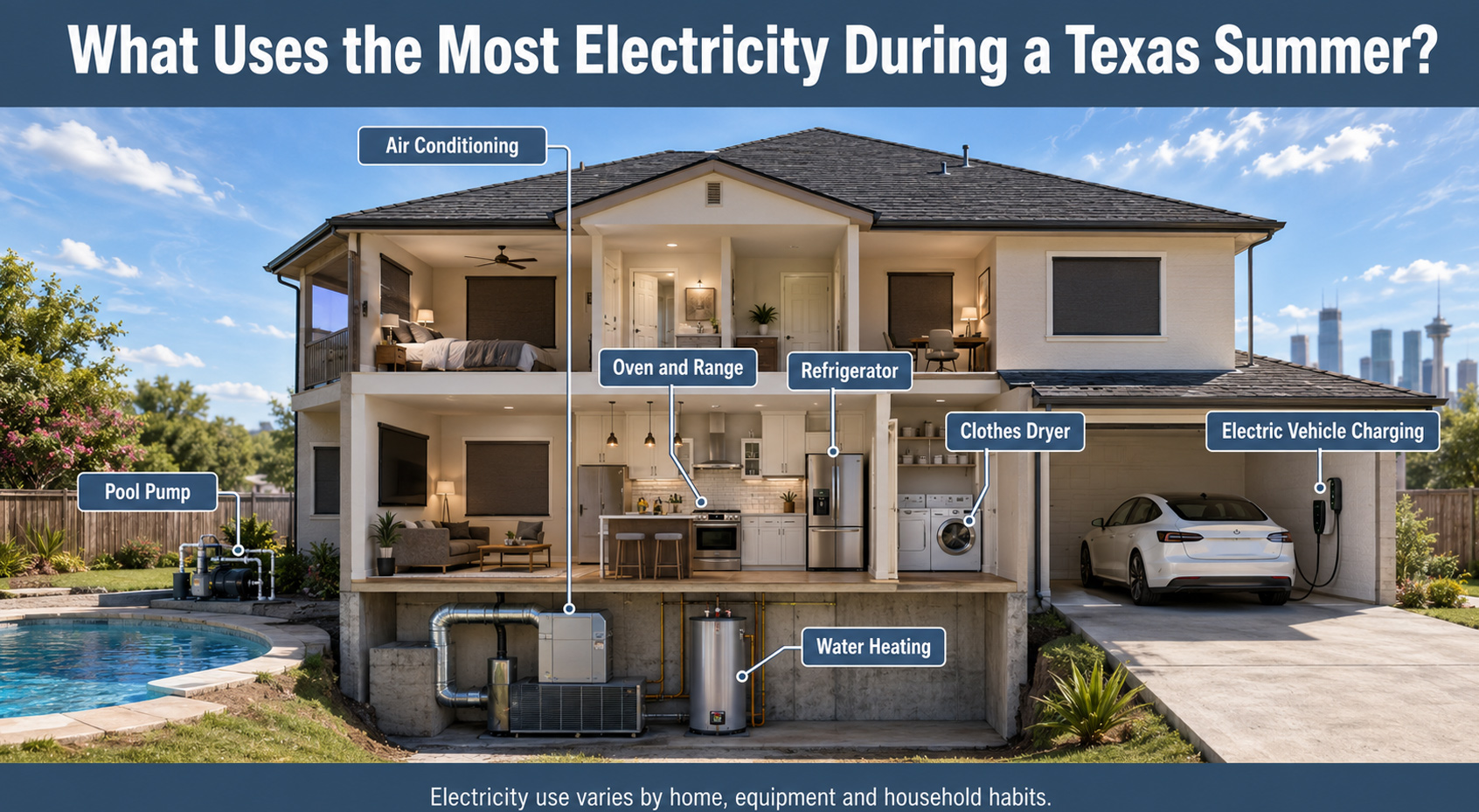
Air conditioning is often the largest source of summer electricity consumption in a Texas home. The exact amount depends on the home’s size, insulation, equipment efficiency, thermostat settings, outdoor temperature and how often the system runs.
Other significant summer loads may include:
- Electric water heating
- Pool pumps
- Clothes dryers
- Ovens and electric ranges
- Refrigerators and freezers
- Dehumidifiers
- Home electronics
- Electric vehicle charging
Because every home is different, begin by reviewing several months of electricity usage rather than relying on a statewide average. Comparing daily or monthly kilowatt-hour consumption can help identify when usage begins to climb.
1. Set the Thermostat as High as Comfortably Possible
The smaller the difference between the indoor and outdoor temperatures, the less work the air conditioner must do. Set the thermostat at the highest temperature that remains safe and comfortable for the people and pets in the home.
There is no single setting that is right for every household. Age, health, humidity, insulation and personal comfort all matter. During extreme heat, safety should come before energy savings.
When the home will be empty for several hours, raising the setting by a few degrees can reduce unnecessary cooling. Avoid shutting the system off entirely if doing so could create unsafe indoor temperatures, excessive humidity or problems for pets, plants or belongings.
2. Use a Programmable or Smart Thermostat
A programmable thermostat can automatically adjust the temperature around work, school and sleep schedules. A smart thermostat may also provide remote control, usage reports, alerts and scheduling features.
ENERGY STAR-certified smart thermostats must demonstrate energy savings using field data. Actual savings vary by climate, equipment, schedule and how the thermostat is used.
A smart thermostat does not save energy simply because it is installed. The schedule and settings still need to reflect when the home is occupied.
3. Do Not Turn the Thermostat Far Down to Cool the House Faster
Setting a thermostat much lower than the desired temperature does not normally make a standard air-conditioning system cool the home faster. It may simply cause the system to run longer.
Choose the temperature you want and allow the system time to reach it. If the house routinely cannot maintain a reasonable setting, that may indicate an equipment, airflow, insulation or air-sealing issue that deserves attention.
4. Check the HVAC Filter Regularly
A dirty filter can restrict airflow and make the cooling system work harder. Check the filter monthly during periods of heavy summer use and replace or clean it according to the equipment and filter manufacturer’s directions.
ENERGY STAR recommends checking the filter every month during heavy-use seasons and changing it when it is dirty. The appropriate schedule depends on the filter, pets, dust, allergies and how frequently the system operates.
Make sure the replacement filter is the correct size and suitable for the HVAC system. A filter with excessive resistance can also affect airflow, so ask a qualified HVAC professional if you are unsure which type to use.
5. Keep Supply and Return Vents Clear
Furniture, curtains, rugs and closed interior doors can interfere with airflow. Check that supply registers and return-air grilles are not blocked.
Do not close a large number of supply vents in an attempt to save energy unless the HVAC system was specifically designed for that method. Restricting airflow can create pressure and performance problems.
If certain rooms remain much warmer than others, a qualified technician can evaluate airflow, duct design and equipment performance.
6. Schedule Appropriate Air-Conditioner Maintenance
An air conditioner needs adequate airflow and properly maintained components to operate efficiently. Homeowners can keep the area around the outdoor condenser free of leaves, weeds and debris, but internal cleaning, refrigerant work and electrical repairs should be performed by a qualified professional.
ENERGY STAR provides an HVAC maintenance checklist that includes filter checks and professional inspection of electrical connections, refrigerant levels, drainage and system controls.
Avoid planting shrubs or installing covers too close to the outdoor unit. Shade alone does not compensate for restricted airflow.
7. Block Direct Afternoon Sunlight
Direct sunlight through windows can add heat to the home, especially through south-facing and west-facing windows. Close blinds, curtains or shades before the strongest afternoon sun reaches the glass.
The U.S. Department of Energy recommends using blinds or curtains to reduce summer solar heat gain, particularly on windows receiving strong sun. Exterior shading, solar screens, awnings and appropriate window films may also help, depending on the home and window type.
Before installing film, confirm that it is compatible with the window manufacturer’s warranty.
8. Seal Air Leaks Around Doors and Windows
Gaps around doors, windows, plumbing penetrations and attic access points can allow cooled air to escape and warm outdoor air to enter.
Weatherstripping and caulk can address many accessible leaks. Larger problems may require a professional energy assessment. Air sealing should be coordinated with ventilation and combustion-safety needs, particularly in homes with gas appliances.
9. Inspect Attic Insulation and Ductwork
Attics can become extremely hot during a Texas summer. Insulation slows heat transfer into the living space, while sealed and insulated ducts help deliver conditioned air where it belongs.
Duct leaks in an attic can waste cooled air before it reaches the rooms. Signs may include unusually warm rooms, high usage, excessive dust or weak airflow. A professional can inspect duct connections, insulation and leakage.
Do not enter an attic during dangerous heat or disturb material that may contain asbestos. Use a qualified professional when conditions are unsafe or the material is unknown.
10. Use Ceiling Fans to Cool People, Not Empty Rooms
Ceiling fans create a cooling sensation by moving air across the skin. They do not lower the room’s air temperature.
Use fans in occupied rooms so the thermostat can remain at a more efficient setting without sacrificing comfort. Turn fans off when everyone leaves the room. The Department of Energy notes that fans cool people rather than rooms.
In summer, many ceiling fans are set to rotate counterclockwise when viewed from below, producing a downward breeze. Follow the fan manufacturer’s instructions because controls and designs vary.
11. Reduce Indoor Heat from Cooking
Ovens and ranges add heat to the kitchen and surrounding rooms. During the hottest part of the day, consider using a microwave, pressure cooker, countertop appliance or outdoor grill when practical and safe.
Cooking earlier or later in the day can also reduce the amount of heat the air conditioner must remove during peak afternoon temperatures. Always use kitchen ventilation correctly and follow fire-safety guidance.
12. Run Dishwashers and Dryers Strategically
Dishwashers and clothes dryers release heat and may add humidity. Run full loads and use energy-saving settings when appropriate. Operating heat-producing appliances during cooler hours may improve comfort, although the effect on the electricity bill depends on the customer’s rate plan.
Most standard Texas electricity plans do not change price by time of day. Customers enrolled in a time-of-use plan should review the Electricity Facts Label and plan terms before shifting usage.
Air-dry dishes when the appliance provides that option. Clean the dryer’s lint filter after each load and make sure the exhaust vent is not restricted.
13. Wash Clothes in Cold Water When Appropriate
Heating water requires energy. Cold-water washing can reduce the energy used for many laundry loads when compatible with the fabric and detergent.
Use the correct water level, wash full loads without overfilling the machine and follow clothing-care instructions.
14. Replace Frequently Used Bulbs with LEDs
LED bulbs use less electricity and release less heat than traditional incandescent bulbs. That matters in summer because heat from lighting adds to the cooling load.
Prioritize fixtures that are used most often. Choose the correct bulb shape, brightness, color temperature and dimmer compatibility for each fixture.
15. Manage Pool-Pump Operation
Pool pumps can be a major electricity load for homes with swimming pools. The appropriate run time depends on the pool, pump, filter, sanitation system, weather and local health requirements.
Do not reduce run time below what is needed to maintain safe water quality. A pool professional can help determine an appropriate schedule. Variable-speed pumps may use less electricity than older single-speed models when properly sized and programmed.
16. Check Refrigerator and Freezer Habits
Keep refrigerator and freezer doors closed as much as possible, verify that door seals are intact and leave adequate ventilation around the appliance according to the manufacturer’s instructions.
An extra refrigerator or freezer in a hot garage may work harder during summer. If an older secondary appliance is rarely used, consider whether it needs to remain plugged in.
17. Monitor Electricity Usage Instead of Waiting for the Bill
Usage monitoring can help identify changes before the monthly bill arrives. Compare kilowatt-hour consumption across similar days and look for sudden increases.
When evaluating a higher bill, separate three questions:
- Did electricity usage increase?
- Did the provider’s energy rate or plan change?
- Did TDU delivery charges, taxes or other approved charges change?
Weather often makes month-to-month comparisons difficult. A July bill should not be compared only with a mild spring month. When possible, compare usage with the same period from the previous year and consider differences in weather, occupancy and equipment.
Why Can My Bill Rise Even If My Electricity Rate Is Fixed?
A fixed-rate plan generally fixes the provider’s energy rate for the contract term according to the Electricity Facts Label and Terms of Service. It does not guarantee the same total bill every month.
The bill can increase when:
- The household uses more kilowatt-hours
- Approved TDU delivery charges change
- Taxes or government-authorized charges change
- A bill credit no longer applies at the month’s usage level
- A promotional credit or other plan feature changes according to its terms
For help understanding rate components, read Texas Electricity Shopping 101 and review the EFL for the specific plan.
Which Parts of the Bill Can Energy Conservation Reduce?
Using fewer kilowatt-hours can reduce usage-based charges, including the provider’s per-kWh energy charge and the TDU’s per-kWh delivery charge. The precise effect depends on the plan.
Conservation does not normally eliminate fixed charges, such as a provider base charge or the TDU’s fixed monthly charge. Bill-credit and minimum-usage plans can also behave differently at certain usage levels.
Southern Federal Power publishes current TDU charges by utility territory. These delivery charges are established through the applicable regulatory process and are passed through without markup.
Quick Summer Energy-Saving Checklist
- Set the thermostat at the highest safe and comfortable temperature.
- Use schedules to avoid cooling an empty home unnecessarily.
- Check the HVAC filter monthly during heavy use.
- Keep supply registers and return-air grilles clear.
- Remove debris around the outdoor condenser without blocking airflow.
- Close window coverings before strong afternoon sun reaches the glass.
- Seal accessible gaps around doors and windows.
- Use ceiling fans only in occupied rooms.
- Limit oven, dryer and dishwasher heat during the hottest hours when practical.
- Run full laundry and dishwasher loads.
- Review pool-pump settings with a qualified pool professional.
- Monitor kilowatt-hour usage throughout the summer.
- Compare the bill with the EFL before assuming the electricity rate changed.
Stay Comfortable and Make Informed Changes
The best summer energy strategy is one that fits the home and the people living in it. Start with low-cost steps, monitor electricity usage and make one change at a time. That makes it easier to see which actions have the greatest effect.
Southern Federal Power is a licensed Texas Retail Electric Provider. Southern Federal offers electricity plans, manages customer accounts and handles billing. The local TDU maintains the poles, wires and meter and responds to power outages.
To determine whether Southern Federal serves your address, read What Areas Does Southern Federal Power Serve?
Frequently Asked Questions
What is the best thermostat setting for a Texas summer?
There is no universal setting for every household. Set the thermostat at the highest temperature that remains safe and comfortable. Health, humidity, pets, insulation and equipment performance should guide the decision.
Does lowering the thermostat cool a house faster?
Not usually. A standard air conditioner typically cools at the same rate regardless of how far the thermostat is lowered. An unnecessarily low setting may cause the system to run longer.
Should I turn the air conditioner off when I leave home?
Raising the setting for an empty home can reduce unnecessary cooling. Turning the system off entirely may allow unsafe heat or excessive humidity to develop. Consider pets, health needs and the length of the absence.
How often should I change my air-conditioner filter?
Check it monthly during heavy summer use and replace or clean it when dirty according to the equipment and filter manufacturer’s directions. Some filters require more frequent service than others.
Do ceiling fans lower the temperature of a room?
No. Ceiling fans move air and help people feel cooler. Turn them off in empty rooms because they do not reduce the room’s air temperature.
Do blackout curtains help reduce electricity usage?
Curtains, shades and blinds can reduce solar heat gain when they block direct sunlight, particularly on windows receiving strong afternoon sun. The effect depends on the window, covering, orientation and home.
Does shading the outdoor air-conditioning unit save energy?
Keeping the condenser clear and maintaining proper airflow is more important than placing objects or plants around it for shade. Do not restrict airflow. Follow the manufacturer’s clearance requirements.
Can Southern Federal Power control TDU charges?
No. TDU delivery charges are established through the applicable regulatory process. Southern Federal Power passes the applicable charges through without markup.
Will using less electricity always lower my bill?
Lower usage generally reduces usage-based charges, but the result depends on the plan. Fixed monthly charges, minimum-usage fees and bill-credit thresholds can affect the total.
Why is my summer electricity bill higher than my spring bill?
Air-conditioning systems usually operate longer during hotter weather. A higher bill may result from greater usage even when the energy rate remains unchanged. TDU charges and plan features may also affect the total.
How can I tell whether my rate or my usage increased?
Compare the current and previous bills, including total kilowatt-hours, billing days, energy rate, TDU charges, credits and fees. Review the plan’s EFL and Terms of Service for the applicable pricing structure.
By implementing some of the tips above, you will make a difference with your energy consumption during the heat of the summer months. The more tips you add the greater your energy savings will be. Choosing an appropriate electricity plan also helps to meet your energy goals. If you have any questions about your plan or would like to speak to someone about your energy goals, please feel free to call us during our business hours (1.844.644.0474). Our agents are in-house and use our energy plans, ask them what plans they are on and why. We are here to help you find the right electricity plan.