

Updated: 9-28-2026
When Texans use electricity can be almost as important to the power grid as how much electricity they use.
Electricity demand changes throughout the day. When millions of homes and businesses use large amounts of power at the same time, power plants and other resources must quickly supply enough electricity to keep the Texas grid balanced.
Moving flexible electricity use away from high-demand periods can reduce stress on the grid. It can also help Texas make better use of available wind and solar generation.
However, shifting when you use electricity will not necessarily lower your bill. The financial effect depends on the terms of your specific electricity plan.
Why Does the Time of Day Matter to the Texas Grid?
Electricity must be generated at approximately the same time it is consumed. Grid operators continuously balance supply and demand to maintain reliable service.
The Electric Reliability Council of Texas, commonly known as ERCOT, manages the flow of electricity for approximately 90% of the state’s electric load. Its responsibilities include maintaining grid reliability and coordinating the competitive wholesale electricity market. Learn more about ERCOT and current grid conditions.
Electricity demand is not evenly distributed throughout the day. Demand can rise quickly when Texans return home, lower their thermostats, cook dinner, wash clothes, charge vehicles, run pool equipment, and use other appliances at the same time.
That concentrated demand creates a peak.
What Is Peak Electricity Demand?
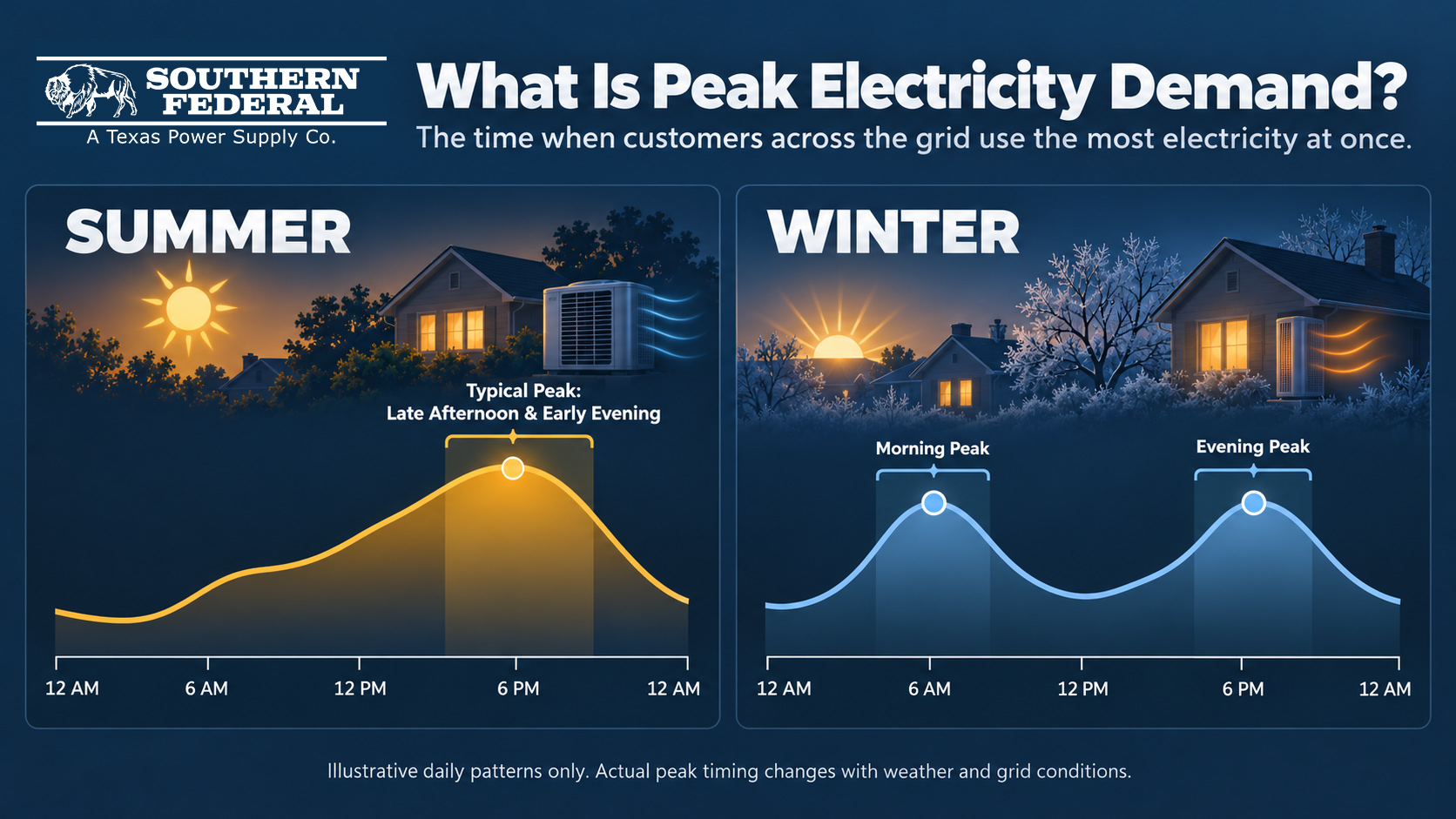
Peak demand is the period when customers across the grid are using the most electricity at the same time.
In Texas, the timing of peak demand depends on the season, weather, daylight, business activity, and available generation.
During a hot summer day, electricity demand frequently climbs through the afternoon as air conditioners work harder. Demand can remain elevated into the evening while people return home and solar generation begins to decline.
During cold winter conditions, demand may be especially high in the early morning and evening when electric heating systems are running.
There is no single peak period that applies to every day of the year. ERCOT evaluates actual and forecasted grid conditions and may issue notices when additional conservation would be helpful.
Why Are Texas Summer Evenings Important?
Texas has added a significant amount of solar, wind, and industrial battery generation . These resources can provide large amounts of electricity during sunny daytime hours.
As the sun sets, solar production declines. Residential electricity demand may remain high because air conditioners are still running and people are arriving home.
The grid must replace the declining solar generation while continuing to meet evening demand. This transition is sometimes called an evening ramp.
On especially hot days, reducing or delaying flexible electricity use during the late afternoon and early evening can help limit the size of that ramp.
Air conditioning is usually the largest source of summer electricity consumption in a Texas home. Customers should never compromise their health or safety, but small thermostat adjustments and delaying optional appliance use can make a difference when grid conditions are tight.
Can Moving Electricity Use Help the Grid?
Yes. Moving flexible electricity use to a lower-demand period can help reduce the amount of generation required during a peak.
Customers may be able to reschedule activities such as:
- Running the dishwasher
- Washing and drying clothes
- Charging an electric vehicle
- Operating some pool equipment
- Using high-energy cooking appliances
- Charging batteries and other large devices
For example, a customer could load the dishwasher after dinner but use its delay setting so it runs later. An electric vehicle may also be scheduled to begin charging overnight instead of immediately after the evening commute.
One household changing its schedule will not balance the Texas grid by itself. When many customers make small changes at the same time, however, the combined reduction can become meaningful.
When Is the Best Time to Use Electricity in Texas?
There is no universal answer because grid conditions change by season and by day.
From a grid perspective, flexible activities are often easier to accommodate when total electricity demand is lower or when renewable generation is plentiful. Depending on the day, that could be overnight or during a sunny midday period.
The best approach is to:
- Watch for official ERCOT grid notices.
- Check the requested conservation hours.
- Move flexible electricity use outside those hours when practical.
- Continue using electricity needed for health, safety, and essential household needs.
Customers can view current supply, demand, operating reserves, and generation information through ERCOT’s grid dashboards.
Texans can also subscribe to the Texas Advisory and Notification System for information about ERCOT grid conditions.
What Can I Do During a Conservation Request?
An ERCOT conservation request asks Texans to voluntarily reduce electricity use during a specified period. It does not necessarily mean that outages are occurring.
Practical steps may include:
- Raising the thermostat by one or two degrees during summer, if it is safe and comfortable
- Avoiding large thermostat changes that make the system work harder later
- Delaying laundry and dishwasher cycles
- Postponing electric-vehicle charging
- Turning off unnecessary lights
- Reducing the use of nonessential appliances
- Closing blinds or shades to reduce solar heat
- Keeping exterior doors and windows closed while the air conditioner is running
- Adjusting pool-pump schedules when it is safe for the pool and equipment
- Avoiding the simultaneous use of several large electrical appliances
Customers should follow equipment instructions and protect household members who are sensitive to heat or cold. Health and safety come first.
Does Using Power at a Different Time Lower My Electric Bill?
Not necessarily.
Whether changing your usage time affects your bill depends on your electricity plan.
Traditional fixed-rate plans
On many fixed-rate plans, the provider’s energy charge is the same throughout the day. Moving dishwasher use from early evening to overnight may help the grid, but it may not reduce the energy charge on your bill.
Your actual bill will still depend on total electricity usage, the provider’s charges, TDU delivery charges, taxes, and any other terms described in the Electricity Facts Label.
Time-of-use plans
A time-of-use plan may charge different rates during different periods. Some plans offer lower prices or credits during selected hours and higher prices during others.
For these plans, moving electricity use can affect both the grid and the customer’s bill. The customer must follow the exact schedule and pricing rules in the Electricity Facts Label and Terms of Service.
Variable-rate plans
Variable-rate energy charges may change from one billing period to another according to the plan documents. That does not necessarily mean the price changes hourly.
Customers should never assume that shifting usage will save money without reviewing the EFL for their specific plan.
What Is an Electricity Facts Label?
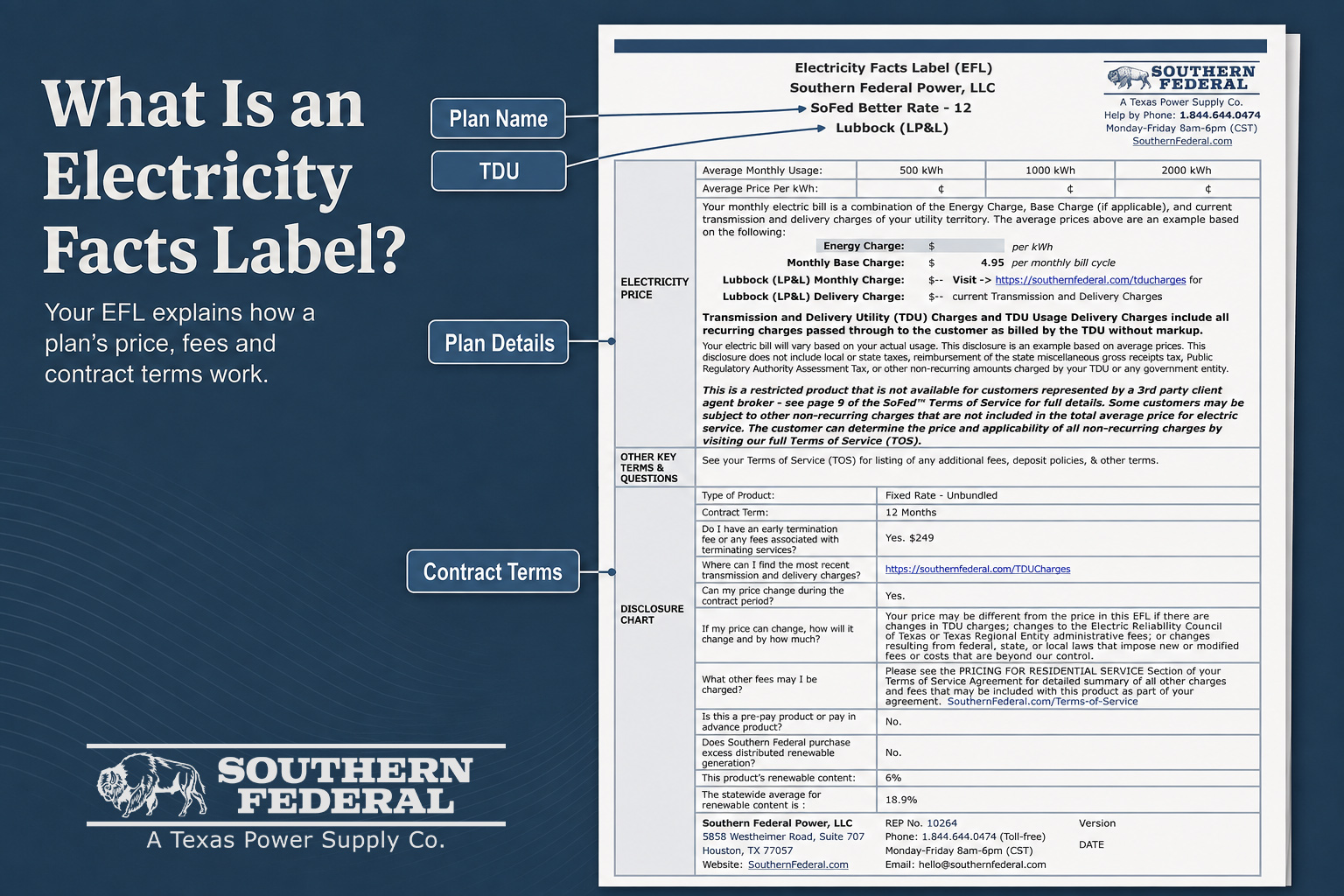
An Electricity Facts Label, or EFL, is the standardized disclosure document for a Texas retail electricity plan.
The EFL shows information such as:
- Average prices at 500, 1,000, and 2,000 kWh
- The provider’s energy charge
- Monthly base charges
- TDU delivery charges
- Bill credits or usage fees
- Contract length
- Renewable content
- Whether the plan has fixed, variable, indexed, or time-based pricing
If a plan includes different prices at different times, the schedule and calculation should be explained in the plan documents.
Before changing your routine to save money, confirm how your electricity plan actually calculates charges. Our Texas Electricity Shopping 101 guide explains how to read an EFL and estimate a complete monthly bill.
How Do Renewable Energy Resources Affect Timing?
Texas produces electricity from natural gas, wind, solar, nuclear, coal, battery storage, and other resources. The available generation mix changes throughout the day.
Solar generation is tied to daylight and weather conditions. Wind generation depends on wind conditions and may be strong at different times. Batteries can store electricity and return it to the grid later, but battery resources have limited duration.
Using flexible electricity when renewable generation is abundant can help the grid make use of energy that is available at that time. Reducing flexible demand when renewable production is declining can also make the transition between resources easier to manage.
This does not mean customers must constantly monitor the generation mix. Understanding the general relationship between electricity timing, demand, and available supply is a useful starting point.
Does Reducing Peak Demand Prevent Power Outages?
Reducing peak demand can support grid reliability, but no individual action can guarantee that an outage will be prevented.
Outages can result from several causes, including:
- Severe weather
- Damaged power lines
- Equipment failures
- Local distribution problems
- Insufficient generation or operating reserves
- Emergency actions needed to protect the wider grid
Your local Transmission and Distribution Utility handles local outages, damaged equipment, poles, wires, and meters. Southern Federal Power manages your retail electricity plan, billing, payments, and account support.
During an ERCOT conservation request, voluntary reductions by many customers can help improve the balance between supply and demand.
Do I Need to Stop Using Electricity During Peak Hours?
No. Customers do not need to turn off everything in their homes or avoid necessary electricity use.
The goal is to identify activities that can be safely and conveniently moved. Air conditioning needed for health, medical equipment, refrigeration, lighting, and other essential uses should remain priorities.
A practical approach is to ask:
Does this appliance need to run right now, or can it run a few hours later?
If it can wait, rescheduling it may help reduce demand during a critical period.
Frequently Asked Questions
Why does electricity use increase in the evening?
Many people return home at approximately the same time and begin using air conditioning, cooking appliances, televisions, laundry equipment, vehicle chargers, and other devices. During summer, this can happen while solar generation is declining.
What time is electricity demand highest in Texas?
Peak timing changes with the season, weather, and grid conditions. Summer peaks often occur during the late afternoon or evening, while winter demand can be especially high during cold mornings and evenings.
Does Southern Federal Power charge different rates by time of day?
It depends on the specific plan. Customers should review their Electricity Facts Label and Terms of Service. Do not assume a plan has time-based pricing unless the plan documents say so.
Will running appliances at night lower my bill?
Only if your plan’s pricing structure provides a financial benefit for doing so. On many traditional fixed-rate plans, the provider’s energy charge does not change by hour.
Should I turn off my air conditioner during an ERCOT conservation request?
Customers should not compromise their health or safety. If practical, a small thermostat adjustment may reduce demand. Closing shades, limiting heat-producing appliances, and delaying flexible activities can also help.
Who should I contact during a power outage?
Contact your local Transmission and Distribution Utility. The TDU maintains the power lines and handles outages. Southern Federal Power can assist with retail account, billing, payment, and plan questions.
Small Changes Can Add Up
Texas has a large and increasingly diverse electric grid. Keeping it balanced requires enough generation to meet electricity demand every moment of the day.
Customers do not need to reorganize their entire lives around the grid. Simply understanding why timing matters can help Texans make informed choices when demand is high or ERCOT requests conservation.
Moving a dishwasher cycle, delaying vehicle charging, adjusting a pool-pump schedule, or making a small thermostat change may seem minor. Across thousands of homes, those choices can add up.
Always review your Electricity Facts Label before assuming that changing when you use electricity will lower your bill. The grid benefit and the financial benefit are related, but they are not always the same.